Recently, I visited Palma de Mallorca, the capital of this well-known Spanish island. Palma is also the capital of the Balearic Islands. In this vibrant island city, the colors of flowers and the Mediterranean Sea intertwine. The historic architecture invites you to look closely at every creative detail. As a design and travel content creator, I was glad to photograph the sights to show you the charm of this lovely city. Discover more about what to see in Palma de Mallorca in a day, highlighting the best architectural sights.
Vibrant Seaside Promenade
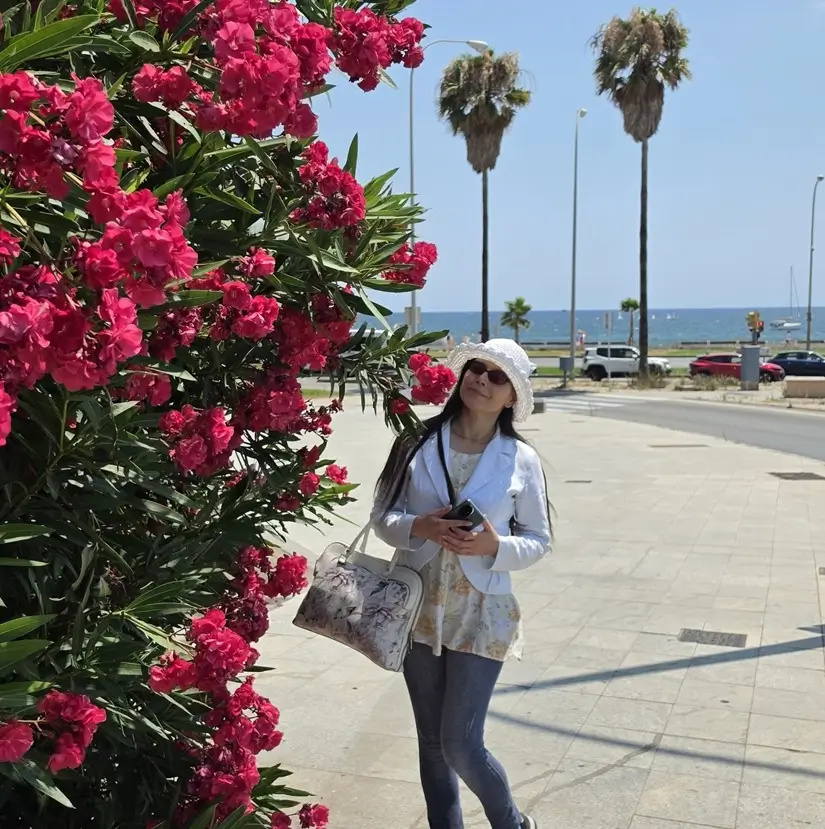
After arriving at the seaside promenade, I was greeted by the joyful colors of flowers, the relaxing tones of the Mediterranean Sea, and, of course, palm trees. All together, the welcoming sights this beautiful region is known for.


Palma de Mallorca’s Top Cultural and Architectural Landmarks
Drawn by the magnificent architectural landmarks, I came closer to observe and photograph every creative detail.


Join me as I discover Palma de Mallorca’s top cultural and architectural landmarks.


Dalt Murada
Dalt Murada, the section of the historic ramparts that surrounded the city, leads to Palma’s top cultural and architectural landmarks: the Palma Cathedral (La Seu) and the Palace of La Almudaina. As you walk, enjoy views of the Parc de la Mar and the blueness of the Mediterranean.


The Palma Cathedral (La Seu)
The Palma Cathedral (‘La Seu’) is one of the most magnificent Gothic cathedrals in the world. As you approach the Cathedral from the Parc de la Mar, you’ll notice its beauty reflected in the water.

La Seu’s main rose window, 11 meters in diameter, is the largest rose window in Gothic architecture. More than a thousand colorful glass pieces create a beautiful play of light and color in Palma Cathedral’s interior as light enters through the window.

Speaking of colorful creativity, Antoni Gaudí, a Catalan architect well-known for creating colorful architecture and interior spaces, contributed to the Cathedral’s interior design. Gaudí opened up large windows and moved choirs and altarpieces, adding to its expansiveness and light.

Among the essential elements of lighting design is the baldachin, or chandelier, designed by Gaudí and Josep Maria Jujol, and made with 33 hanging lights. Gaudí and Jujol, a renowned creative duo of Catalan Modernism, designed buildings and indoor spaces inspired by the colors and forms of natural creations.
Miquel Barceló, also an innovative and versatile artist, created the ceramic mural on the right. This vibrant artwork is 12 meters tall and inspired by the Mediterranean Sea and the land of Mallorca.
The Palace of La Almudaina
The Palace of La Almudaina, located just next to the Cathedral, is a palace in both the architectural and functional sense, as it is currently one of the residences of the Spanish royal family. This historic landmark of Palma was constructed by the Romans and later adapted by the Moors. Among the areas of the palace open to the public are the Gothic chapel of Santa Anna, the parade ground, the Moorish baths, and the terraces, which offer amazing views of the sea and Palma Bay.


The Consell Insular de Mallorca
Next to Palma City Hall stands the Consell Insular de Mallorca, Mallorca Island’s governing council. This palace, built with an emblematic Neo-Gothic façade designed by the architect Joaquín Pavía y Birmingham, dates back to the old Provincial Government. Artist Llorenç Ferrer i Martí created the sculpted details.

The Gran Hotel, Palma CaixaForum
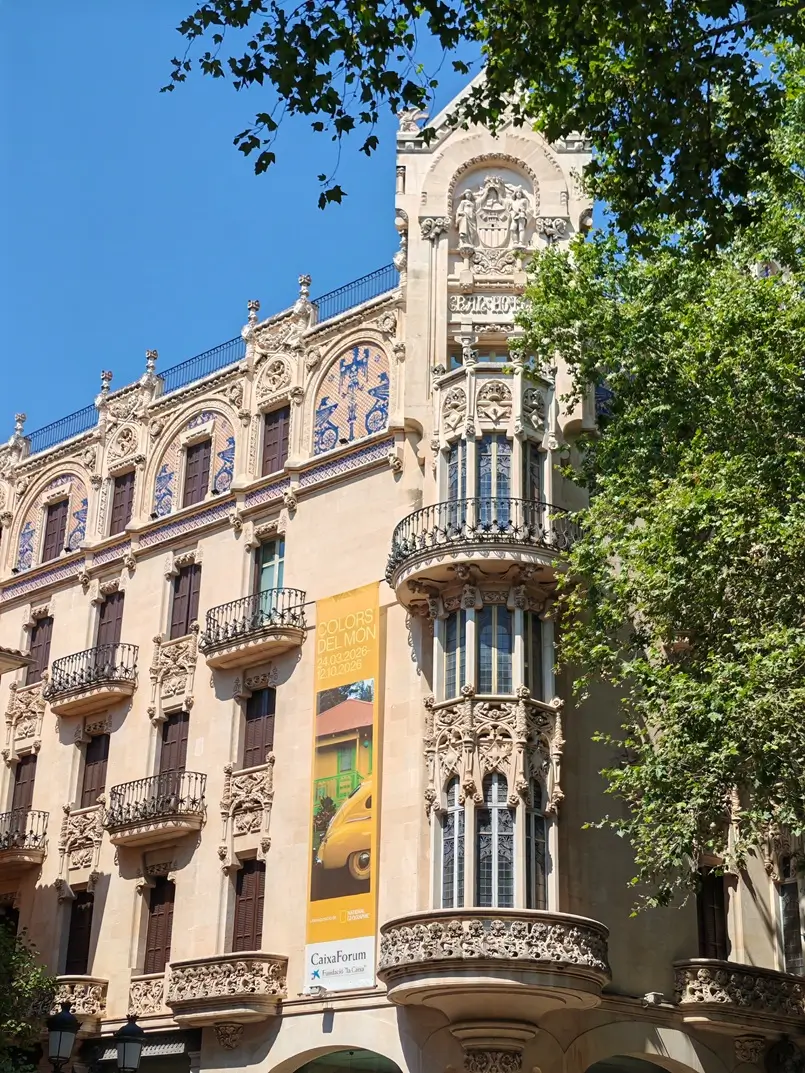
One of Palma de Mallorca’s first modernist buildings is the Gran Hotel, currently home to Palma CaixaForum. This sophisticated building, abundant with decorative details, was designed by architect Lluís Domènech i Montaner, one of the key figures of Catalan Modernism. The architectural gem dates to 1903. It was the first building with modern amenities such as electricity and a telephone, becoming a pioneering hotel on Mallorca Island. Inside, you can see temporary exhibitions and a permanent one: a collection by the modernist painter Hermen Anglada Camarasa.
Related Article: How to Choose Colors in Design & Branding – Expert Tips
Palma de Mallorca’s Architecture Inspired by Gaudí
In Palma de Mallorca’s architecture, Gaudí’s influence is visible at numerous locations. Walking the streets of the charming capital of the Balearic Islands, as a lover of art, I had many “wow, look at this” moments, followed by photography sessions – creating images and videos for my articles and social media posts.
Can Forteza Rey
Can Forteza Rey is an Art Nouveau-style building that incorporates stylistic façade decoration into the interior design, with multi-colored tile mosaics. This decorative moment reveals, among others, a strong influence of Catalan Modernist artists. For instance, colorful tile mosaics adorn Antoni Gaudí’s works such as Park Güell and Casa Batlló.
Richly ornate galleries and enclosed balconies follow the stylish theme, as well as botanical, floral, and animal motifs on the walls and decorative elements, for example, a floral-motif stained-glass window. A pastel color palette with golden ornaments prevails, and the combination of materials includes stone, iron, wood, and glass.

This artistic building was originally designed for housing and built at the beginning of the 20th century. It carries the name of goldsmith Lluís Forteza-Rey, who designed the interior decor and the façade plan.

Can Casasayas Building and the Pensión Menorquina
Following the Art Nouveau Style through Palma takes you to the Can Casasayas building and the Pensión Menorquina. These identical, symmetrical, wavy architectural creations were built for Josep Casasayas Casajuana, the owner of the Can Frasquet pastry shop.

Two renowned architects were in charge of the buildings’ creation. Francesc Roca led the design project and the first phase of work. Guillem Reynés directed the completion of these creatively designed buildings. Among the decorative elements inspired by the natural world, typical of Art Nouveau, are ferns, acanthus leaves, and butterflies on the capitals and the wrought iron of the balconies. Wooden window shutters also follow the wavy lines of these two beautiful buildings.

Palma has a lot more to see, for instance…


Although I visited this lovely city for only a day, I tried to make the most of it. My conclusion: a day in Palma de Mallorca is a day well spent. Whether you’re an architecture and culture aficionado, a charming-streets explorer, a shopping lover, or a beach-time fan, the capital of the Balearic Islands has it all. Sunny greetings from Danica Maricic, Editor-in-Chief of Archi-living.com and Content Creator! 🙂

For more design & travel communications, you are welcome to follow Danica Maricic, Editor-in-Chief, on Facebook, Instagram, and LinkedIn, and discover these related articles.