
The Swiss bathroom specialist, Laufen, presents SaphirKeramik, a development which was first shown two years ago as a prototype. The manufacturer is now presenting the first series of products – and details of the impressive performance of the new material. In its choice of name, Laufen is referring to the addition of the mineral corundum, which occurs in nature in different modifications as a component of sapphire. This is also used in the watch industry as sapphire glass dials and its hardness is only surpassed by that of diamonds. Likewise, the new ceramic is considerably harder and has a greater flexural strength, which is exhibited in entirely new washbasin designs. SaphirKeramik turns the old material into completely new shapes: closely defined radii and edges are possible – and thin walls which have until now not been seen in sanitary ceramic.
Previously, when the aim was to create a bathroom design in ceramic, manufacturers with production expertise had the choice between classic ceramic, so-called vitreous china, and fine fireclay. Vitreous china excels through the waterproof qualities of the surface – water absorption virtually 0 – and therefore meets the highest hygienic requirements for WCs and urinals. Soft, round and flowing shapes can be very readily achieved with this material and the appropriate know-how of the manufacturer. However, in view of arbitrary shrinkage during the drying and firing of the body, the manufacturing process is difficult to control. This material reaches its limits with very large ceramic parts. This is when fine fireclay is then used: here, the classic ceramic mass (slurry) is stabilised through the addition of clay already fired (chamotte) – thus permitting the production of large ceramic parts such as double washbasins or floor-standing washbasin pedestals. The shrinkage in the production process, which is difficult to control, is mastered better through the use of the chamotte.
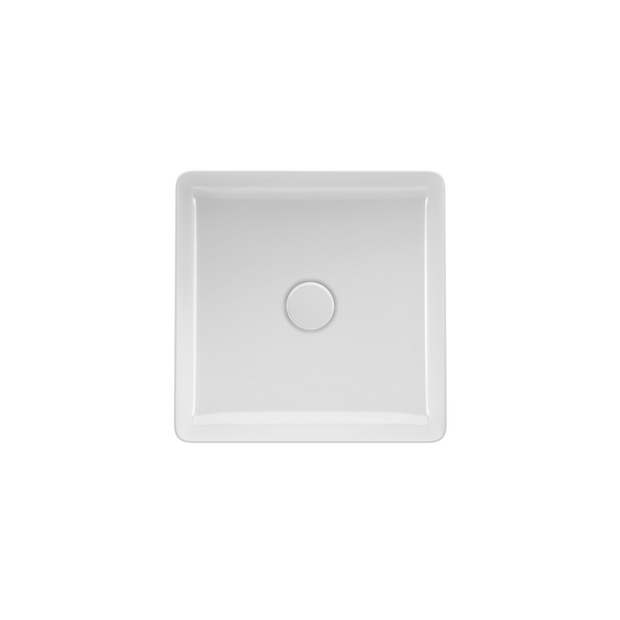
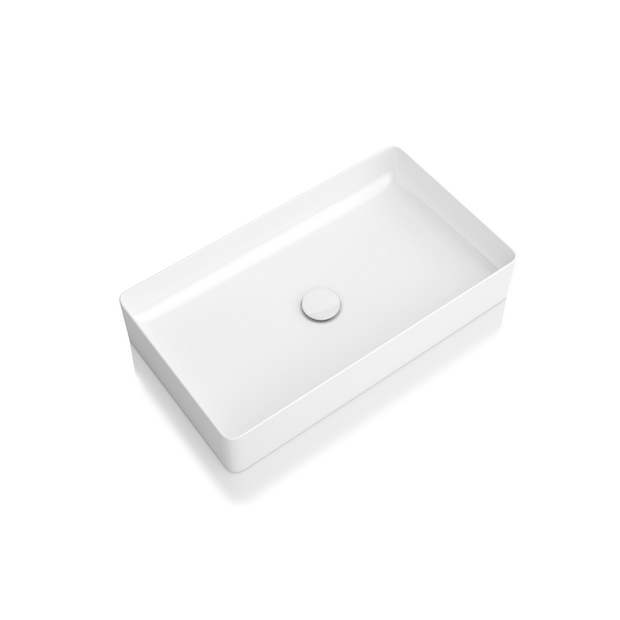
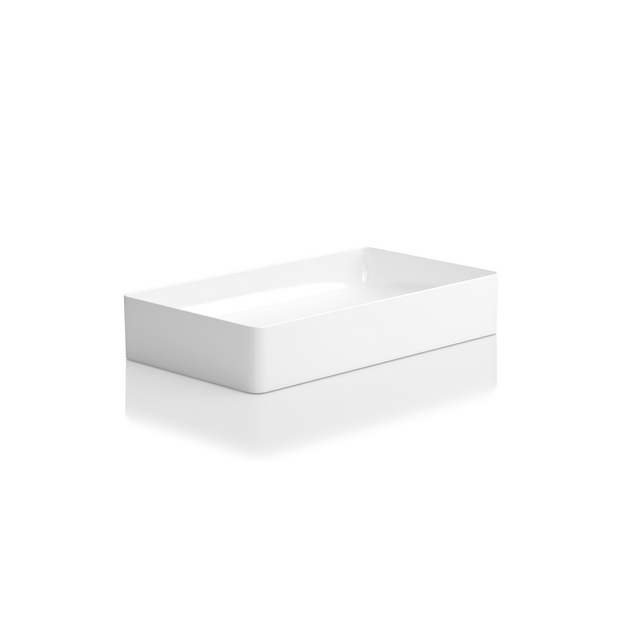
With SaphirKeramik from Laufen, another version is being launched on the market. The hardness of the material permits shapes which were previously not possible. A more delicate design language, more defined in shape and line, becomes possible – exactly matching the ideas behind contemporary architectural design. Draft designs where ceramic was previously not considered owing to the necessary material coating, can now be achieved – and therefore exploit all the benefits which ceramic has in the bathroom: in addition to absolute hygiene, these advantages include the insensitivity of the material to abrasive cleaners and mechanical abrasion. Finally, ceramic is also an environmentally friendly and sustainable product. It largely consists of the natural and widespread raw materials kaolin, clay, feldspar and quartz sand, it can be produced economically in large numbers – assuming appropriate know-how is available – it can be safely used in the bathroom in contact with drinking water for many years and can be completely recycled at the end of a long product life.
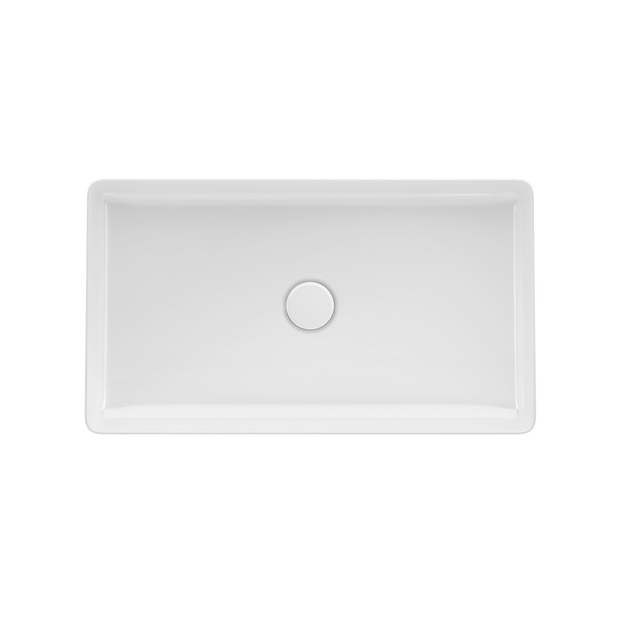
Dr. Werner Fischer, Research Director at Laufen, developed the SaphirKeramik together with his team and various university research institutes. It is above all the mechanical properties of the material that are convincing: for example, the Federal Institute for Materials Research and Testing in Berlin (BAM) examined the flexural strength of the material and measured an average of over 120 kp/mm² – which is comparable with steel and twice as high as that of vitreous china. The greater hardness permits thinner walls and simplified structure of the ceramic parts, which in turn results in less material, lower weights and benefits in terms of sustainability: fewer raw materials required and lower energy consumption in firing, production and transport. The material’s high hardness opens up new design possibilities – especially as regards the radii of the products: 1‑2-mm radii for edges and 2‑mm radii for corners are technically feasible with the new SaphirKeramik. The state of the art for classic ceramics is radii from 7 to 8 mm.
The SaphirKeramik gets its strength from an exactly specified addition of the material corundum, which is colourless in its pure form. Mixing the clay with silicate-ceramic raw material affords this material, in addition to its porcelain-like white, the strength with which the elegant and delicate form language becomes possible. The exact recipe, according to Dr. Werner Fischer, was developed in half a decade of research and development – and is the best kept secret of the Swiss manufacturer.
